Why a Public Bench Changes the Feel of a Street
Why a public bench changes the feel of a street: learn how to assess its location, access, comfort, and upkeep before asking a city to install one.
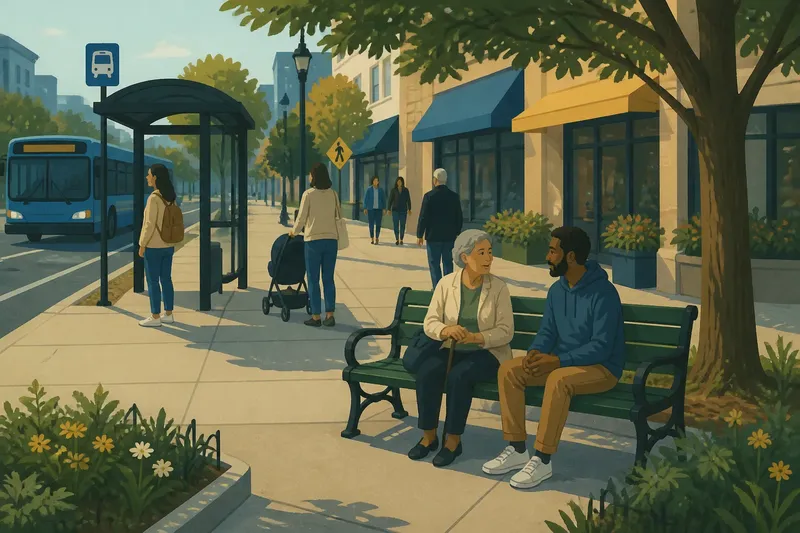
The common mistake with a public bench is to treat it as street furniture that matters only to someone who is tired. That can cost a street an easy place to wait, rest, or talk without entering a business. A bench can make a route more usable, but only if people can reach it and feel comfortable staying there.
A public bench changes the feel of a street by offering a reason to pause. Its value depends on its location, the path around it, and the care it receives.
How does a bench make staying a reasonable choice?
Walking usually has a destination. Sitting does not. A bench lets someone take a break without buying a drink, entering a building, or explaining why they have stopped. That small choice can make a street feel less like a corridor and more like shared space.
It may help someone rest between errands, let a caregiver wait while a child takes a break, or give neighbors a place to talk. The bench does not create those needs. It makes them easier to accommodate in public.
A seat by itself, however, does not make everyone feel welcome. A bench beside a blank wall may feel different from one near a shop window or an active plaza. Location, condition, and nearby activity all shape whether people choose to use it.
Who can a well-placed bench bring into view?
When resting is possible, more kinds of everyday activity may become visible. Someone waiting for a bus, taking a break during an errand, or meeting a friend can share the same stretch of sidewalk. The street is then used for more than commuting or shopping.
Visibility is not the same as inclusion. A seat that is difficult to reach, exposed to traffic spray, or surrounded by activity that makes people uneasy may not serve everyone. Notice who uses it, who approaches and turns away, and whether people seem able to share the space. Those observations are more useful than assuming that a new seat automatically broadens access.
Imagine a neighborhood corner where older adults often stop to catch their breath but have no place to sit. If the city adds a bench beside the pedestrian route and away from the curb, residents might see more people pausing during errands. That visible change would not prove that every access barrier had disappeared.
Why can placement matter more than appearance?
A carefully designed bench can still be poorly placed. People need a clear approach, room to sit without blocking others, and enough separation from moving traffic to feel at ease. A seat tucked behind a sign, set on a narrow sidewalk, or placed beside a loading area may be present but difficult to use.
Shade, shelter, and direction also affect comfort. A sunny seat may suit a cool day but feel unpleasant in strong heat. A sheltered spot may help in light rain, while a view of a busy street may appeal to some people and trouble others. There is no single orientation that works for every location.
Residents can report what they observe without prescribing construction details. Note whether people can approach from the sidewalk, whether a stroller or mobility device can pass, and whether doors, ramps, and crossings remain clear. City staff can assess the site against local accessibility and public-space requirements.
Can a bench support conversation without creating community?
Seats can make brief conversations easier. People may greet a neighbor, wait together, or sit near a street vendor without having to keep moving. A comfortable place to pause gives these small encounters room to happen.
But a bench is not a social program. It cannot settle disputes over noise or replace a community center, library, or sheltered gathering space. Some people want to sit alone. Others may avoid a bench because they feel watched or because the surrounding area sends an unwelcoming message.
Good public-space planning leaves room for different uses. A bench can sit near activity without forcing conversation. A clear path, appropriate lighting, and a view of the street may help people choose how to use the space, though each feature has to suit the site.
What makes a bench stay useful?
A public bench is part of a working street, not a one-time installation. Dirt, litter, damaged surfaces, and poor drainage can make it unpleasant or unusable. If nearby plants overgrow the path or a bin regularly spills, the bench may be blamed for conditions that need broader maintenance attention.
Responsibility may be split among city departments, property owners, contractors, and community groups. A useful report names the location, describes what is happening, and explains how it affects use. A photo can help identify a site, provided it does not expose someone’s private information. For recurring issues, ask which team handles cleaning, repairs, or site planning rather than assuming one department covers everything.
Care also means avoiding designs that treat ordinary sitting as suspicious. Public seating should allow people to rest in reasonable ways. If a bench makes it difficult for someone to use the space comfortably, its presence may not deliver the welcome the installation was meant to express.
What can a bench do when the route itself is inaccessible?
A bench helps only if people can get to it. Broken pavement, missing curb ramps, difficult crossings, fast traffic, or a blocked sidewalk may prevent someone from reaching the seat comfortably. A place to rest does not repair the route itself.
This is why seating requests often connect to larger questions about street design. Residents may ask for a bench while also pointing out that the nearest crossing is difficult to use or that the sidewalk narrows where people need to pass. Naming both the immediate need and the surrounding obstacle gives city staff a clearer picture.
Keep the request focused on observable conditions. Describe how a person approaches the location, where a pause is needed, and what makes the route difficult. If the basic path is inaccessible, say so rather than treating street furniture as a substitute for a usable sidewalk.
What should you check before requesting a public bench?
Use these observations to make a request specific. Each one points to a decision: describe the need, ask for a site review, or raise a separate access or maintenance concern.
- Check whether people already wait or rest near a transit stop, public building, or busy corner; if they do, identify that spot as a possible seating location, but if they do not, explain the specific need rather than assuming foot traffic alone calls for a bench.
- Check whether the approach from the sidewalk is clear; if it is, ask the city to assess the site for a seat, but if it is blocked, report the obstruction as well as the seating need.
- Check whether a stroller or mobility device can pass the proposed area; if it can, note that the route remains open, but if it cannot, ask for a different placement or an access review.
- Check whether doors, ramps, crossings, and loading areas would remain usable; if they would, include the location in your request, but if they would not, identify the conflict and ask staff to consider another site.
- Check exposure to sun, wind, traffic spray, runoff, and nearby activity; if the spot seems comfortable for a pause, describe why, but if a condition makes it stressful, ask staff to consider a more suitable placement.
- Check for litter, damaged surfaces, poor drainage, or overgrown plants; if upkeep is the main issue, report it to the responsible maintenance team, but if a seat is also needed, state both concerns separately.
- Check whether you know who owns or maintains the location; if you do, send the request to that agency or property owner, but if you do not, ask the city to direct it to the responsible team.
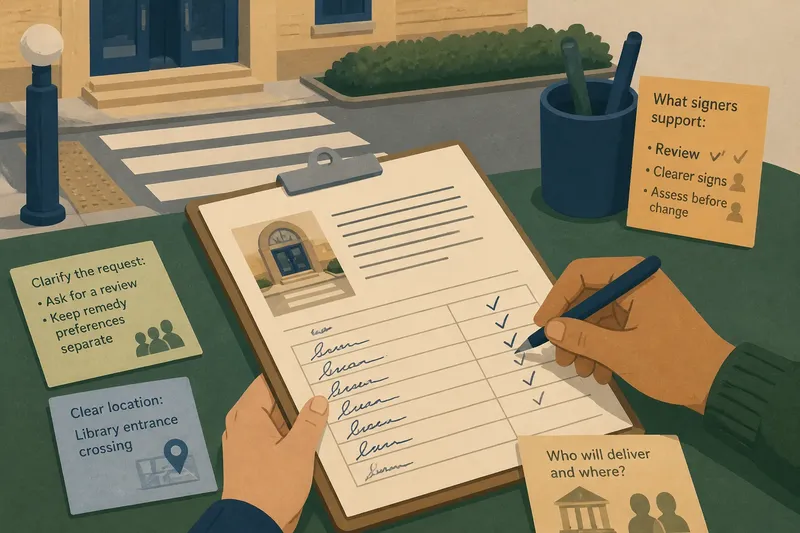
Say you notice people waiting outside a neighborhood library, while the nearby sidewalk stays clear and a shady space sits beside the pedestrian route. You record that the approach is open, a mobility device can pass, and no entrance or ramp would be blocked. You also see litter around an existing bin, so you note that separately. In the request, you ask the city to assess the shady spot for a public bench and direct the litter report to the maintenance team. The resulting decision is clear: the location merits a seating review, while cleanup needs a separate response.
How should you describe a public bench request?
Where do people naturally pause?
Identify a place where people already wait, rest, or gather briefly, such as near a transit stop or public building. Treat this as a possible location, not proof that every busy spot needs a seat.
Can people reach the proposed spot?
Check whether the approach is clear and whether a seat would interfere with the walking route, entrances, ramps, or crossings. If access is already difficult, include that concern rather than treating a bench as a substitute for a usable sidewalk.
What could make the seat uncomfortable?
Notice exposure to sun, wind, traffic, runoff, or activity that makes a pause feel stressful. Name the condition and ask the city to consider a placement suited to the site.
Who maintains the location?
Ask which agency or property owner handles seating and nearby upkeep. If the responsible team is unclear, describe the location and request direction.
Why does a public bench change the feel of a street?
A public bench changes the feel of a street by offering a choice: people can stop without leaving public space or justifying their presence. That choice can make a route more accommodating and let everyday street life unfold at a slower pace.
Connect a request to the conditions that shape how a bench will be used: a reachable location, room to pass, a comfortable setting, and a clear plan for care. The useful question is not simply whether a street has a seat, but whether people who need to pause can reach it and feel entitled to use it.