A First Neighborhood Walk After Moving In
A first neighborhood walk after moving in can reveal useful destinations, comfortable places to pause, and routes worth revisiting without turning it into a survey.
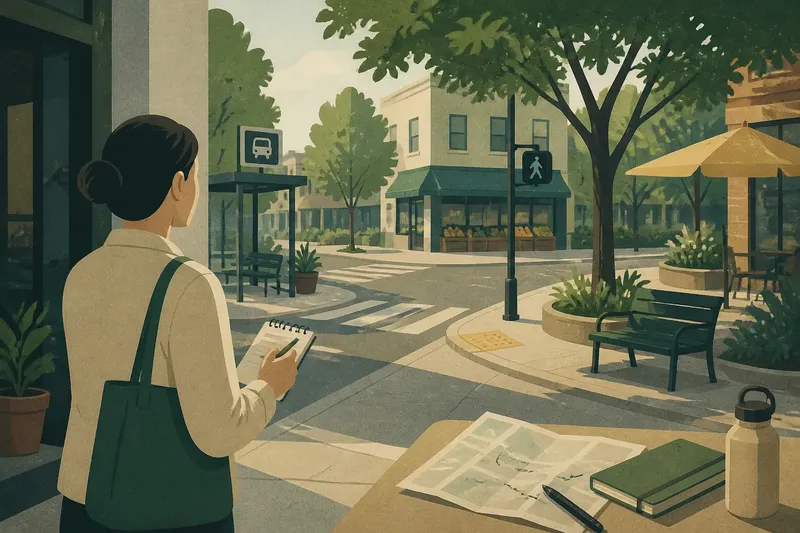
The common mistake on a first neighborhood walk after moving in is trying to cover the whole area; the cost is a blur of streets and errands, with little sense of where you would actually want to go again. A first neighborhood walk works better as a small, purposeful outing: notice one everyday destination, one comfortable pause, and one route that feels useful to revisit.
What should you notice on a first neighborhood walk?
Think of the walk as a way to learn how the area fits into an ordinary day, not as a search for every attraction. Pick a destination you may need soon, such as a grocery store, pharmacy, bus stop, laundromat, or public library. The goal is to understand the approach and surroundings, not to complete an errand.
Pay attention to the transition between your front door and that destination. Is there a clear sidewalk? Where does a crossing feel straightforward? Are there trees, storefronts, or open sightlines that make the route pleasant to walk? These details help you remember a route as a sequence of places rather than as a string of street names.
Bring a phone with a map app if you find it useful, but leave room to make your own observations. A paper map or a small notebook can help you mark a turn, a useful bus stop, or a location that you want to look up later. You do not need to record every detail.
How can one walk reveal a useful route?
Imagine you have just moved into an apartment near a busy avenue and want to learn the walk to a grocery store. You start in daylight with no shopping list, follow the sidewalk shown on your phone, and notice that the direct route crosses the avenue where traffic moves quickly. A quieter side street leads to the same store, with a marked crossing and a small plaza on the way.
At the plaza, you pause long enough to see whether there is a place to sit, shade, and a clear view of the crossing. You continue to the store entrance, note which side of the block it faces, then return by the quieter street. The result is not a verdict on the neighborhood. It is a practical route you can recognize, plus a pause that may be useful when you need a moment before heading home.
The walk can also reveal choices rather than a single “best” route. The direct avenue might suit a quick daytime trip, while the side street feels more comfortable when you have time. Keep the distinction specific: note what you observed, such as traffic noise or a usable crossing, rather than writing a broad judgment about a whole block.
Where is a comfortable place to pause?
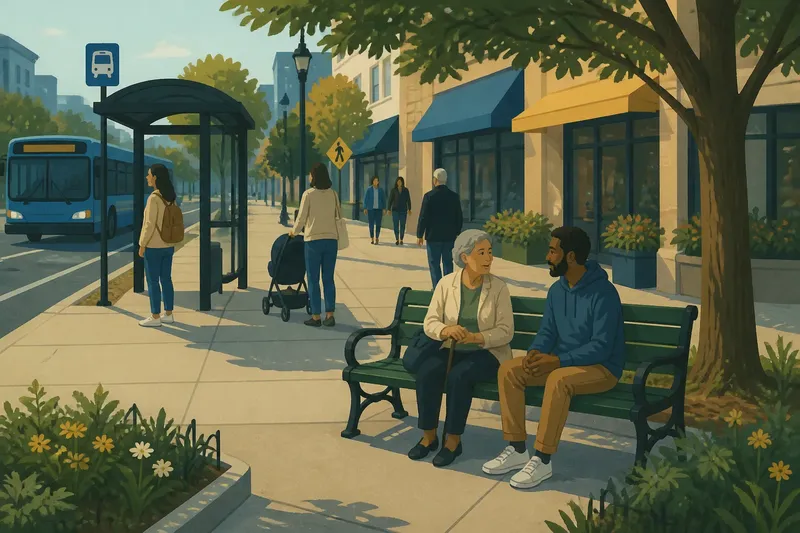
A pause does not need to be a destination. It might be a library entrance, a small park, a shop window set back from foot traffic, or a bus shelter where you can check the route. Look for a place where stopping does not block a doorway or narrow sidewalk. Notice whether you can sit or stand without feeling in the way.
Comfort is personal and can change with weather, time of day, and how busy a space is. A sunny corner may be pleasant on a cool afternoon but exposed on a hot day. A cafe patio may offer a place to rest, while a public plaza may let you pause without buying anything. You are learning what is available, not assigning a permanent label to the place.
Keep access in mind as well. A curb ramp, a smooth path, a bench with room to approach, or a crossing with enough time to use it can shape whether a pause or route works for you or someone walking with you. If a feature is unclear, make a note to check it on another outing instead of assuming the route will suit every visit.
What should you check before choosing a route?
How do I choose a first destination?
Choose something you are likely to use soon, such as a transit stop or grocery store, rather than a landmark that requires a special trip. A familiar purpose gives the walk a natural endpoint and makes the route easier to remember.
Should I follow the map or explore side streets?
Use the map to get oriented, then explore only where the path is open and comfortable to walk. If a detour becomes confusing, return to a street you recognize rather than treating exploration as an obligation.
What should I write down afterward?
Record a few practical cues: the street where you turned, a crossing you preferred, and a pause point you would use again. Short notes are easier to act on than a detailed description of every block.
When should I repeat the walk?
Revisit the route at a different time if your routine depends on it, such as a commute or an evening errand. A second look can reveal changes in traffic, open businesses, or the feel of a public space without requiring a longer first outing.
How can you keep the walk low-pressure?
Give yourself permission to turn back. A first walk does not need to reach a particular radius or produce a complete mental map. Choose a manageable outing, carry water if you expect to be out for a while, and stop when you have enough information for today.
When you get home, separate direct observations from questions. “The library entrance is on the quieter street” is an observation. “Does the bus stop have a shelter?” is a question for a later visit or a local transit map. That distinction keeps a first impression useful without turning it into a claim about how a place always works.
A first neighborhood walk after moving in can be a small act of orientation: one destination, a comfortable pause, and a route you can picture taking again. The next time you go out, let a real need guide the choice—perhaps a trip to the pharmacy or a search for the closest bus stop—and add only the details that make that trip easier to understand.